String Gauge Guide: Light, Medium, or Heavy?
Gauge gets treated like an afterthought, but it changes how a guitar feels more than almost any other spec. Go too light and you lose punch and tuning stability; go too heavy and every bend fights back. Here’s how to actually pick, instead of grabbing whatever’s at the counter.
What Gauge Actually Means
Gauge is just the string’s thickness, measured in thousandths of an inch, and it’s usually written as a range for the full set: something like 10-46, meaning the thinnest string is .010” and the thickest is .046”. Lighter gauges are easier to fret and bend but produce less volume and can buzz more on a guitar set up for heavier strings. Heavier gauges push back harder against your fingers but hold tuning better and drive amps and acoustic tops harder.
Light Gauge: Best For
New players, anyone with smaller hands or finger pain, and lead players who bend and vibrato constantly. A set like the Dean Markley Vintage Bronze Extra Light (10-47) is forgiving on the fingers while still holding tone reasonably well on an acoustic.

Medium Gauge: Best For
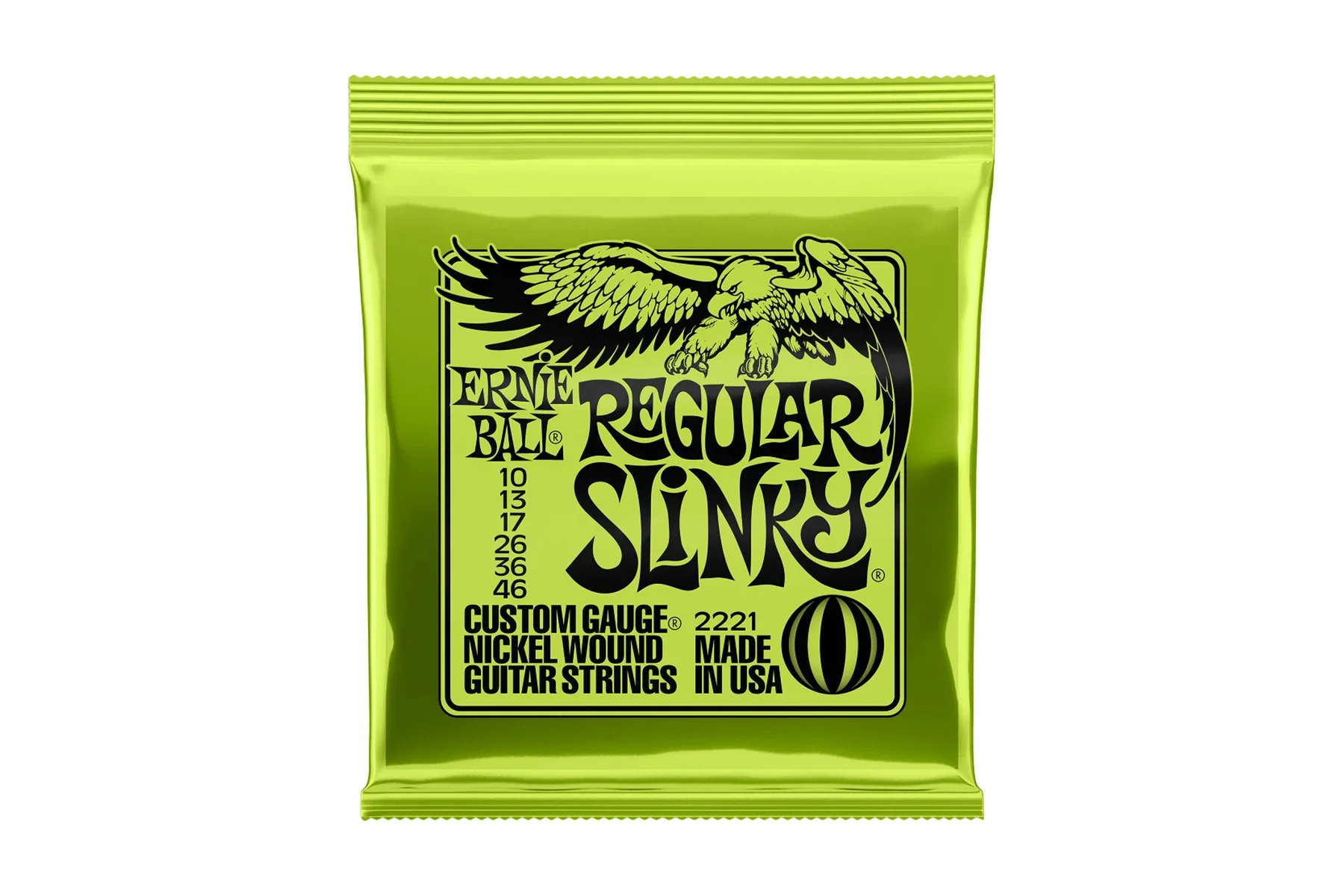
The default for most working players. It’s the middle ground that balances comfort against tone and tuning stability, which is why a nickel-wound 10-46 set like the Ernie Ball Regular Slinky ends up on so many electrics regardless of genre.
Heavy Gauge: Best For
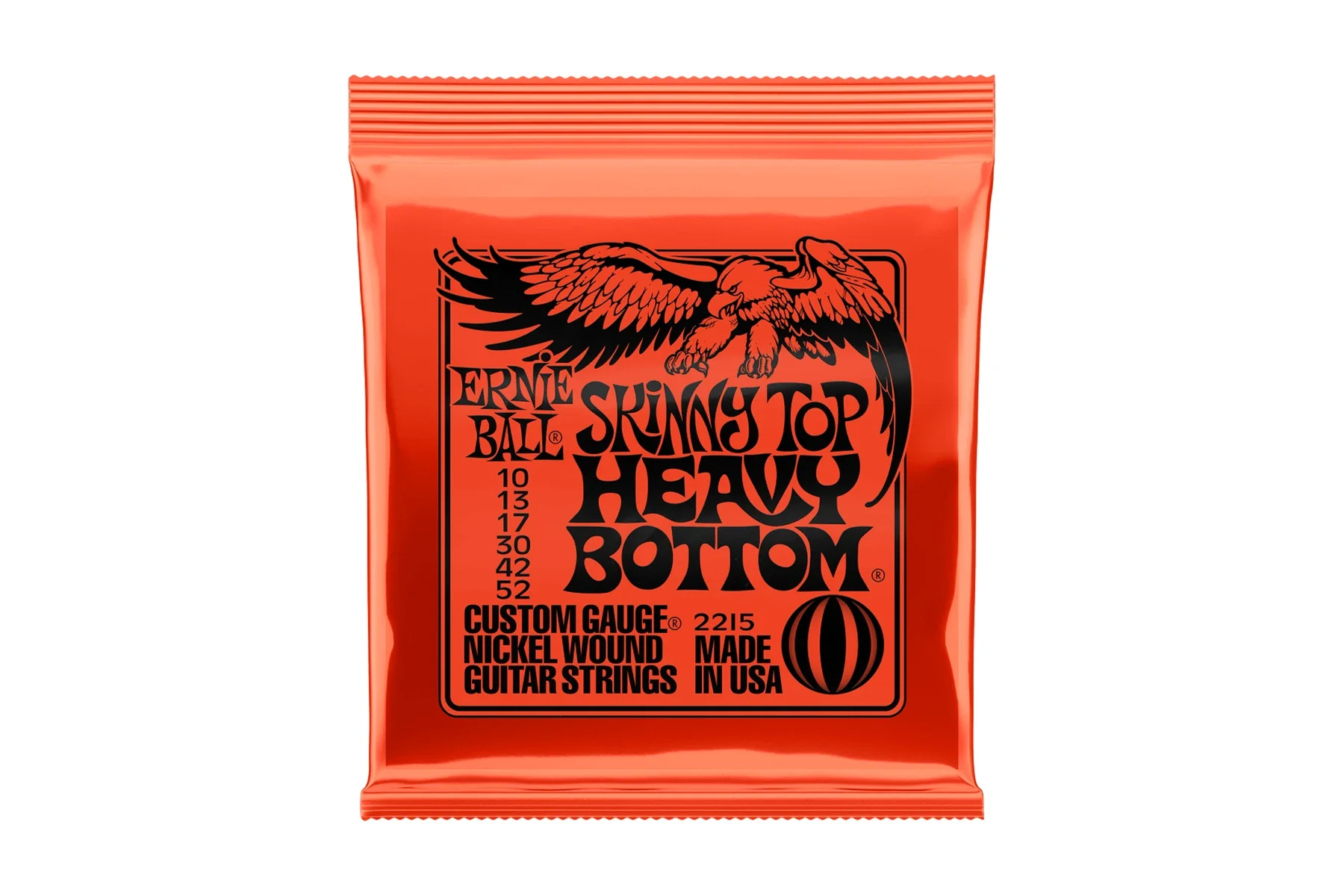
Drop tunings and heavy strumming on electric guitar call for a heavier nickel-wound set like the Ernie Ball Skinny Top Heavy Bottom Slinky (10-52), which keeps the low strings taut without stiffening up the high strings too much. On acoustic, phosphor bronze is the material to reach for if you want more projection and low end without a pickup: a set like the Martin Authentic Acoustic Lifespan 2.0 (11-52) sits on the heavier end of that range and adds real projection. Phosphor bronze is built specifically for acoustic tone, so it is not a fit for electric guitars or drop tunings, regardless of gauge.

If You’re Not Sure
Match whatever gauge is already on the guitar for your first change, since the setup (neck relief, action, intonation) was likely done around that tension. Once you know how a guitar responds, you can experiment a half-step up or down and judge for yourself rather than guessing.
Changing gauges by more than one step usually means a small truss rod and intonation adjustment. If that sounds intimidating, most gauge changes within a normal range (like 9-42 to 10-46) won’t need anything beyond a fresh tuning.