Hybrid picking is a guitar technique where you hold your pick between thumb and index finger while simultaneously using your middle and ring fingers to pluck individual strings. It bridges the gap between strict pick playing and pure fingerpicking -- giving you the attack and tone of a pick on lower strings while adding independent finger-plucked notes on higher strings. Country guitarists made it famous (hence the nickname 'chicken picking'), but it's used in blues, rock, and fusion too.
(Before diving into hybrid picking, make sure you have a solid grip foundation -- see our [how to hold a guitar pick guide](/knowledge-hub/2026-06-02-how-to-hold-guitar-pick) and [fingerpicking guitar for beginners guide](/knowledge-hub/2026-06-02-fingerpicking-guitar-for-beginners).)
What Is Hybrid Picking?
- The pick (held between thumb and index finger) handles low strings and downstroke attack
- The middle finger (m) plucks mid strings
- The ring finger (a) plucks high strings
The pinky is optional -- some advanced players add it for 4-voice simultaneous plucking, but most hybrid picking uses just pick + m + a.
Why Hybrid Picking Instead of Pure Fingerpicking?
Pure fingerpicking requires all four fingers and is excellent for independent polyphonic playing. But it sacrifices pick attack -- you can't replicate the sharp snap of a flatpick with bare fingers.
- Pick attack on bass strings (that sharp, aggressive tone)
- Finger articulation on treble strings (pull-offs, arpeggios, chicken-picked pops)
- Speed advantage -- pick sweeps and alternate-picked passages stay in play
The Chicken Picking Sound
The signature sound of country hybrid picking is the popped treble note -- you curl your middle or ring finger under the string and release it with a slight snap. This creates a bright, percussive attack with a subtle twang.
To practice this: 1. Fret the 7th fret of the G string (D note) 2. Curl your middle finger under the string 3. Release quickly -- let the string pop off your fingertip 4. The result should be noticeably brighter and snappier than a normal fingerpicked note
This snap is what defines the country chicken picking tone.
Hand Position for Hybrid Picking
Hold your pick normally -- between the tip of your index finger and the pad of your thumb. Curl your middle and ring fingers so they hover just above the strings at approximately string level.
Key adjustment: Flatten your pick grip slightly compared to pure pick playing. This keeps your middle and ring fingers closer to the strings and reduces the travel distance between pick strokes and finger plucks.
Your pinky and ring finger may want to anchor on the body -- this is okay for stability, but aim to reduce dependency on anchoring as you advance, since it limits reach to higher strings.
Hybrid Picking Exercises
Exercise 1 -- Simple arpeggio (pick, m, a) A chord, open position: - Pick the open A string (down) - Middle finger plucks the G string - Ring finger plucks the high E string - Repeat: pick, m, a, pick, m, a at 60 BPM
This trains the basic three-way coordination.
Exercise 2 -- Country two-string lick Fret the 7th fret of the G string (pick, downstroke) and simultaneously pluck the 5th fret of the B string with your middle finger. This parallel motion is the basis of hundreds of country licks.
Exercise 3 -- Scale run with finger pops Play a G major scale ascending: use the pick for notes on the low E, A, and D strings. Use your middle finger for G string notes and ring finger for B and high E. This gives you pick attack on bass notes and snap on treble notes -- the classic hybrid picking color.
Exercise 4 -- String skipping Hybrid picking shines for string skipping -- playing non-adjacent strings quickly. Practice: - Pick the 5th fret of the low E - Middle finger plucks the 5th fret of the G (skipping the A and D strings)
This would require a sweeping motion with pure pick playing -- hybrid lets you do it cleanly and simultaneously.
Common Mistakes
Using only the middle finger. Train both middle and ring fingers equally from the start, or you'll develop an imbalance that's hard to correct later.
Gripping the pick too tight. A tight pick grip freezes your hand and makes finger movement stiff. Keep the pick grip firm but not tensed.
Starting too fast. Hybrid picking requires independent motor control of the pick hand that feels unnatural at first. Start at 50-60 BPM and only increase tempo when both fingers respond cleanly.
Guitar Picks for Hybrid Picking
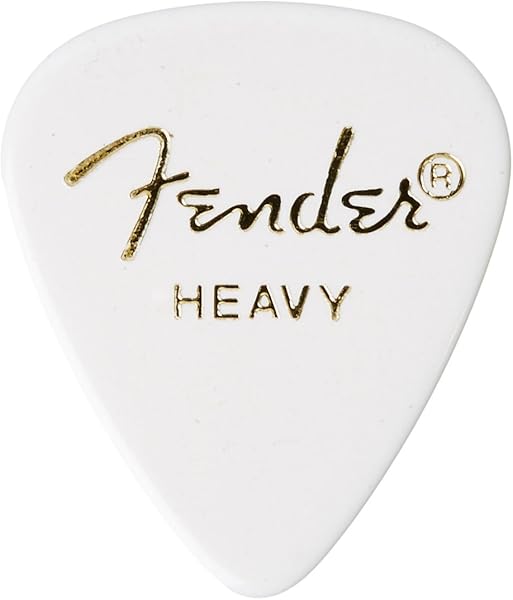
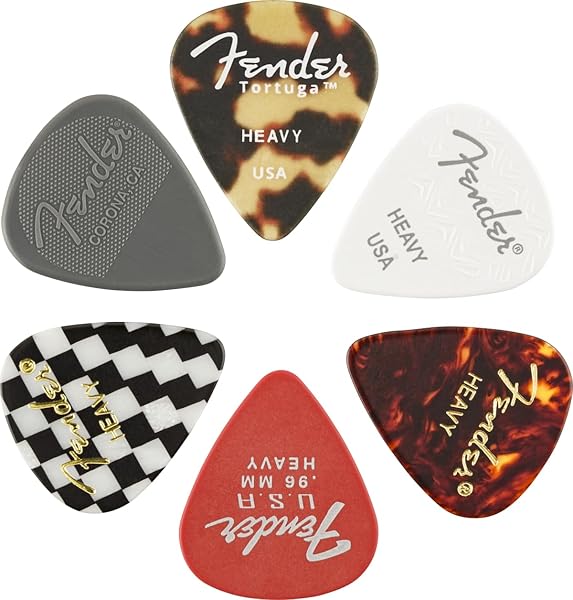
Most hybrid pickers prefer medium-to-heavy picks (0.73mm-1.0mm) -- thin picks flex unpredictably during hybrid patterns and interrupt the alternating pick/finger motion. A pick with a textured grip surface also helps, since the pick shifts position more during hybrid playing than pure picking. See our [guitar picks thickness guide](/knowledge-hub/guitar-picks-thickness-guide) for pick recommendations by technique.
Who Uses Hybrid Picking?
- Country: Brad Paisley, Albert Lee, Vince Gill
- Blues: Eric Johnson, Steve Morse
- Rock/Fusion: Guthrie Govan, John Petrucci
- Classic: Mark Knopfler (Dire Straits) used a similar approach without a pick at all, but his three-finger technique shares the independence that hybrid picking trains
Once you can execute a clean hybrid lick, you'll immediately understand why these players reach for it -- it produces sounds that pure picking and pure fingerpicking simply can't.
Build your technique with the right tools. [Shop PGL's guitar picks and accessories](/shop) -- grip, thickness, and material all affect your hybrid picking control.
Browse Professional GL — Strings, Capos, Pedals & More. USA-Designed. Free Shipping on Orders $50+.
Trusted by 1,318+ professional musicians · 4.8 stars · 30-day money-back guarantee · Ships in 1–3 business days.
READY TO UPGRADE YOUR RIG?
Shop Guitar Strings, Capos & Pedals — Free Shipping $50+
USA-designed gear trusted by 1,318+ musicians. Free shipping on orders $50+. 30-day money-back guarantee.
Shop All Guitar Gear — Free Shipping $50+ →