Every beginner needs exactly 5 guitar accessories: a clip-on tuner, a set of picks, a strap, a stand, and (optionally) a capo. Total cost: $55–$110. Everything else in the guitar accessories aisle — string winders, polish kits, humidifiers, wireless systems, locking tuners — is either maintenance equipment you don't need yet, gear for gigging musicians, or a solution to a problem you haven't encountered. Buy the five essentials on day one and resist the urge to accessorize further until you've been playing for 90 days. Based on hands-on testing by our editorial team, these recommendations reflect real-world performance.
The 5 Accessories Every Beginner Actually Needs
1. Clip-On Tuner ($10–$20)
A clip-on tuner is the single most important accessory for any guitar player. It attaches to the headstock, senses string vibration, and displays which note you're playing with colored arrows indicating flat or sharp. No batteries, no input cable, no technical knowledge required.
Why it matters: An out-of-tune guitar sounds bad regardless of how well you play. More importantly, your ear doesn't know what in-tune sounds like when you're starting out — the tuner bypasses this problem entirely. Tune before every practice session, no exceptions.
- Snark ST-8 Super Tight ($10–$14): The most popular clip-on tuner in the world for good reason. Accurate, bright display, clips securely.
- D'Addario NS Micro ($20–$23): More discreet (stays on the headstock during performance), equally accurate.
- TC Electronic PolyTune Clip ($35): Polyphonic tuning (strums all 6 strings at once) — useful once you're experienced, overkill as a first tuner.
2. Guitar Picks ($3–$8 for a variety pack)
Picks come in thickness categories: thin (0.46–0.60mm), medium (0.73–0.88mm), and heavy (1.0mm+). As a beginner, start with medium thickness — they're forgiving for strumming while giving enough resistance for single-note playing.
- Thin picks flex more, producing a bright, strummy tone. Easy to use for rhythm playing, less suitable for lead or single-note work.
- Medium picks are the balanced choice — most professional players default here.
- Heavy picks produce a warmer, more precise attack. Preferred by many lead guitarists and jazz players.
Recommended starting point: The Fender 351 shape in medium (.73mm) or the Dunlop Tortex Standard in .73mm (green). Buy a 12-pack — picks disappear constantly. At $0.25–$0.50 each, losing them is not a problem you need to solve with expensive cases or holders.
Beginners who fingerpick: If you plan to fingerpick exclusively (classical, folk, or fingerstyle), you may not need a pick at all initially. Start without one, add thumb picks and fingerpicks once you know whether you want them.
3. Guitar Strap ($15–$35)
A guitar strap lets you play standing up and prevents the guitar from sliding or falling when seated. Straps attach to strap pins on the guitar body — most acoustic guitars have one pin at the bottom strap button; the other end ties around the headstock with a shoelace-style strap end. Most electric guitars have two strap buttons and simply clip at both ends.
- Width: 2-inch straps are comfortable for most players; 2.5-inch straps distribute weight better for heavier guitars
- Adjustability: Should adjust from approximately 36 to 60 inches to accommodate sitting and standing heights
- Material: Nylon straps are durable and inexpensive; leather straps last longer and look better but cost more; woven cotton straps are comfortable but stretch slightly over time
Recommended: Levy's Leathers 2-inch Cotton Guitar Strap ($15–$22) or Planet Waves Classic Guitar Strap ($18–$28). Both are widely available and reliable for years of use.
Strap locks: These are metal washers that prevent the strap from accidentally slipping off the strap pin — a real risk with heavier guitars. They cost $10–$15 and are worth adding if you play standing often. Not required for beginners who mainly practice seated.
4. Guitar Stand ($15–$25)
A guitar stand keeps your guitar safely off the floor and immediately accessible between practice sessions. Guitars stored in cases get played less — accessibility matters more than most beginners expect. A guitar visible on a stand gets picked up for a 5-minute practice session a case-stored guitar doesn't.
- A-frame stands: The most common style. Folds flat. Works for most acoustic and electric guitars. Look for models with rubber-padded arms that won't scratch the finish.
- Tripod stands: More stable, slightly larger folded. Better for heavier guitars.
- Wall mounts: Space-saving alternative for players with multiple guitars. Not necessary for one guitar.
Recommended: Hercules GS301B ($18–$22) or String Swing CC01K-BW ($25). Both have rubber padding that won't react with guitar finishes and fold compactly.
Humidity warning for acoustic guitars: If you live in a dry climate (relative humidity consistently below 45%), keeping an acoustic guitar on a stand for long periods can cause the wood to crack or the neck to shift. In dry climates, store acoustic guitars in a case with a soundhole humidifier and use the stand during active practice periods.
5. Capo ($10–$25) — Optional but Very Useful
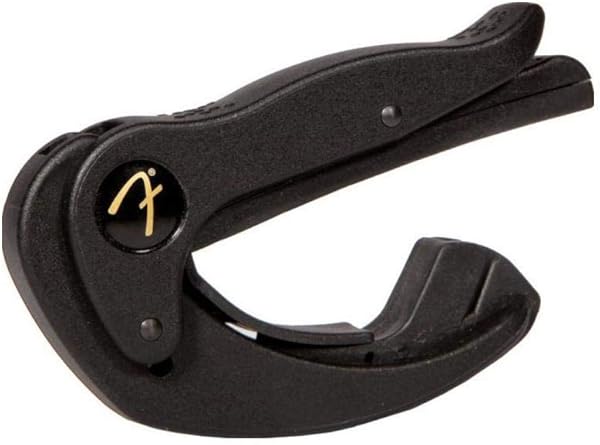
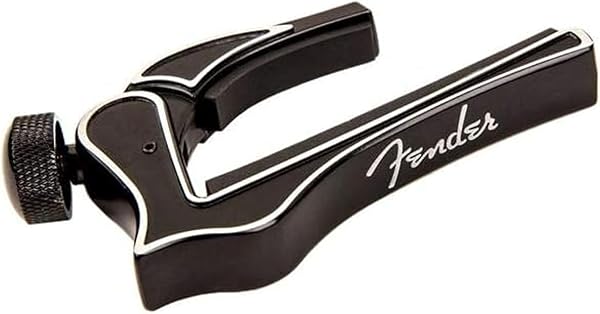
A capo is a clamp that attaches across the guitar neck, raising the pitch of all strings simultaneously. It lets you play open-chord shapes in any key without learning new chord shapes — which is very useful for playing along with recorded music.
- Many popular songs are played in keys that don't work with standard open chord shapes (G, C, D, Em, Am)
- A capo at fret 2 with G-C-D shapes plays in A — matching many rock and pop recordings
- It makes it easier to match a singer's vocal range to guitar accompaniment
- Spring-action capos: Squeeze open, release to clamp. Fast and easy to use. The most common type.
- Screw-tension capos: Turn a knob to apply precise tension. More accurate intonation but slower to use.
- Partial capos: Cover only some strings. A niche tool for specific playing styles — not needed for beginners.
Recommended: Kyser Quick-Change Capo ($19–$24) for spring-action ease, or G7th Performance 3 ($32–$38) for the most precise intonation. The Kyser is the better starting choice for beginners.
What to Skip (For Now)
String winder: A small crank that speeds up string changes. Costs $3–$8. Genuinely useful for frequent string changes, but as a beginner you'll change strings perhaps 3–4 times per year. Manual tuning peg turning takes 60 extra seconds. Skip for now.
Guitar polish and cleaning kit: Useful for maintaining your guitar's appearance and fretboard health. However, most beginners don't need this until after 6 months of regular playing. Incorrect use of polish on unfinished fretboards can cause damage. Wait until you understand what your specific guitar's finish and fretboard material require.
Soundhole humidifier: Essential if you live in a genuinely dry climate (below 40% relative humidity). Not necessary in humid coastal areas. Check your home's humidity with a $10 hygrometer before buying a humidifier system.
Cable and guitar amp (for acoustic players): Only needed if you're buying an acoustic-electric guitar and plan to plug in. Pure acoustic guitars need no cable or amp for home practice.
Wireless guitar system: A solution to the problem of tripping over a cable during live performance. Costs $60–$200. Completely irrelevant to home practice. Buy this when you start gigging regularly, not before.
Total Budget Summary
| Accessory | Budget Pick | Quality Pick | |-----------|------------|-------------| | Clip-on tuner | Snark ST-8 ($10) | D'Addario NS Micro ($20) | | Picks (12-pack) | Fender Medium ($5) | Dunlop Tortex .73mm ($7) | | Guitar strap | Levy's Cotton ($18) | Levy's Leather ($35) | | Guitar stand | Generic A-frame ($15) | Hercules GS301B ($22) | | Capo (optional) | Generic spring-action ($10) | Kyser Quick-Change ($24) | | Total | $58 | $108 |
Even at the quality end, $108 covers every essential accessory you need for the first year of playing.
FAQ
Do I need a metronome as a beginner? A metronome is genuinely useful for developing rhythm — it's not just for classical players. However, most smartphones have free metronome apps that are perfectly adequate. You do not need to purchase a standalone metronome. Use GuitarTuna, Pro Metronome, or your phone's built-in metronome. If you find yourself practicing to a metronome daily (which is the right way to practice), a standalone metronome ($15–$25) is a worthwhile upgrade eventually.
Should I buy a guitar case or keep my guitar on a stand? For daily practice, a stand is better than a case — accessibility increases practice frequency. A gig bag (soft case, $30–$60) is worth having for transport and protection during storage. A hard shell case ($60–$150) is essential for gigging musicians or anyone transporting a guitar regularly in a vehicle. For a beginner who plays at home, a stand for daily use and a gig bag for occasional transport is the right combination.
What's the best clip-on tuner for acoustic guitar? The Snark ST-8 is the most widely recommended clip-on tuner for beginners at any price point. It clips securely to the headstock, works in ambient noise, reads both acoustic vibration and audio input, and costs $10–$14. The D'Addario NS Micro is better if you want a more discreet tuner for performance — it folds flat against the headstock and is nearly invisible from the audience. Both are accurate enough for any practice or performance need.
Ready to shop for your first guitar setup? Visit [professionalgl.com/knowledge-hub](https://professionalgl.com/knowledge-hub) for complete gear guides across all budgets, or ask our Pro Concierge team for personalized recommendations.
---
See also: [Best Guitar Strings for Beginners](/knowledge-hub/2026-06-22-2026-06-22-best-guitar-strings-for-beginners) | [Best Guitar Capo Guide](/knowledge-hub/2026-06-13-best-guitar-capo-guide) | [Best Guitar Picks Guide](/knowledge-hub/2026-06-12-best-guitar-picks-guide) | [Guitar Maintenance Tips](/knowledge-hub/2026-06-14-guitar-maintenance-tips) | [Guitar Storage Tips](/knowledge-hub/2026-06-14-guitar-storage-tips)
Browse Professional GL — Strings, Capos, Pedals & More. USA-Designed. Free Shipping on Orders $50+.
Trusted by 1,318+ professional musicians · 4.8 stars · 30-day money-back guarantee · Ships in 1–3 business days.
READY TO UPGRADE YOUR RIG?
Shop Guitar Strings, Capos & Pedals — Free Shipping $50+
USA-designed gear trusted by 1,318+ musicians. Free shipping on orders $50+. 30-day money-back guarantee.
Shop All Guitar Gear — Free Shipping $50+ →