Drop D tuning lowers your guitar's 6th string (the thickest, lowest-pitched string) from E down one whole step to D, producing the string order DADGBE from low to high. Every other string stays in standard tuning. This single string change has outsized impact: it makes one-finger power chords possible on the bottom three strings, gives rhythm parts a heavier, more resonant low-end, and opens up chord voicings that are impossible in standard tuning. Drop D is the most commonly used alternate guitar tuning in popular music — found everywhere from Nirvana to Led Zeppelin to Bruce Springsteen.
How to Tune Your Guitar to Drop D (Step-by-Step)
Drop D requires lowering only one string. Here is the process:
Method 1: Tune by ear (reference pitch) 1. Play your open 4th string (D string) and let it ring 2. Play your open 6th string (E string) simultaneously or alternately 3. Slowly loosen (turn counterclockwise) the 6th string tuning peg while plucking the string 4. Stop when the 6th string sounds exactly one octave below the open 4th string — both notes should be the same letter name (D) separated by an octave 5. The sound should be a deep, resonant D, noticeably lower than the E string you started with
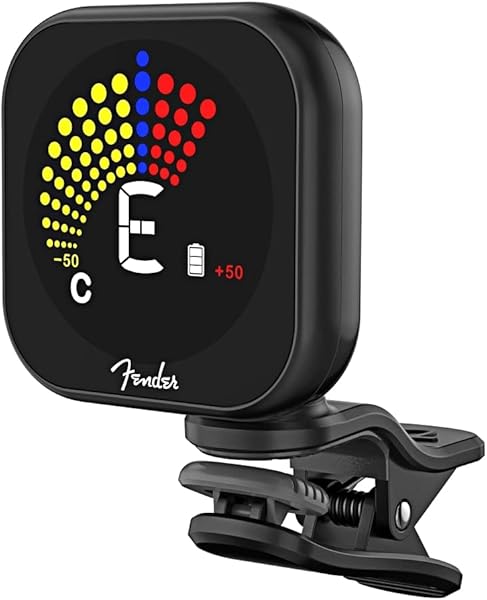
Method 2: Use a clip-on tuner 1. Activate your clip-on tuner (or chromatic tuner app) 2. Pluck the 6th string 3. The tuner will display "E" in standard tuning 4. Loosen the string slowly while continuing to pluck — watch the tuner display 5. Stop when the tuner displays "D" and the needle or bar is centered (in tune)
How long does it take? Less than 30 seconds once you've done it a few times. This is one reason drop D is so popular — it's the easiest alternate tuning to transition into and out of, especially with a locking drop D capo or a D-Tuna device that drops the 6th string with a single lever.
Returning to standard: Simply tighten the 6th string back to E using the same tuner or by matching it to the 5th fret of your 5th (A) string, which in standard EADGBE gives you E.
The Drop D Advantage: One-Finger Power Chords
- Index finger on the root (6th string)
- Ring or pinky on the fifth (5th string, 2 frets higher)
In drop D, the two lowest strings (6th and 5th) are now D and A — a perfect fifth apart, just like any power chord voicing. This means you can play a D power chord by barring straight across both strings with one finger. Slide that same one-finger barre anywhere on the neck and you have a power chord in any key on the bottom two strings.
- Move power chords faster (no need to re-form a two-finger shape)
- Play palm-muted power chord riffs with greater precision and speed
- Focus your picking hand on muting and dynamics while your fretting hand stays relaxed
Power chord positions in drop D:
| Fret | Root Note | Power Chord | |------|-----------|-------------| | Open | D | D5 | | 2nd | E | E5 | | 3rd | F | F5 | | 5th | G | G5 | | 7th | A | A5 | | 9th | B | B5 | | 10th | C | C5 |
Play any of these with one finger barring strings 6, 5, and optionally 4 (which, at the same fret in drop D, adds the octave of the root — creating a fuller, thicker sound).
Essential Drop D Chord Shapes
Drop D doesn't just unlock power chords — it creates unique open chord voicings that ring beautifully on acoustic or clean electric guitar.
Drop D chord shapes to learn first:
D5 (open drop D): All open strings 6-4 (D-A-D) + standard D chord shape on strings 1-4. A massive, resonant D chord.
Dsus2: Strings 6-1 open except the 1st string fretted at the 2nd fret. A lush, open sound common in folk and acoustic rock.
Dadd9: Similar to Dsus2 with the 2nd string open. Great for strummed acoustic parts.
G (drop D voicing): Fret the 6th string at the 5th fret with your index finger (one-finger barre power chord on 6th-5th-4th), then standard G chord voicing on the upper strings. This G has more low-end warmth than the standard open G.
Standard open chord shapes in drop D: G, Cadd9, Em, and Am all work exactly the same in drop D as in standard tuning — the only string that changed is the 6th, which you simply avoid or mute when playing these chords. Don't feel like you need to relearn your entire chord vocabulary.
Famous Songs Written in Drop D Tuning
Drop D appears across virtually every rock subgenre. Here are well-known examples across styles:
- "Heart-Shaped Box" — Nirvana (the main riff uses drop D power chords extensively)
- "Black Hole Sun" — Soundgarden (Chris Cornell used drop D across much of Superunknown)
- "Everlong" — Foo Fighters (actually uses Drop D on all strings, but the drop D bottom string is the key element)
- "Moby Dick" — Led Zeppelin (Page's heavy riffing in drop D)
- "The Immigrant Song" — Led Zeppelin (powerful riffs utilizing the low D)
- "Going to California" — Led Zeppelin (acoustic fingerpicking in drop D)
- Many Delta blues recordings from the 1920s–40s used drop D for its resonant sound on acoustic slide guitar
- "B.Y.O.B." — System of a Down
- "Master of Puppets" — Metallica (some sections)
- Pantera, Tool, Alice in Chains — extensively use drop D or drop-tuned variants
- Many Nashville finger-style players use drop D for the open D bass drone, particularly for songs in D or A major
When to Use Drop D vs Standard Tuning
- You're playing a song written in drop D (obviously)
- You want heavier, lower-pitched rhythm guitar tones without tuning the entire guitar down
- You're playing music in D or A major/minor and want the open D bass string as a drone
- You want faster one-finger power chord riffs — drop D is simply faster for rock rhythm playing
- You're playing slide guitar — the low D string gives slide players access to deep, resonant D voicings
- You're playing in keys other than D or A where the low D string doesn't help
- You're playing jazz, where clean intonation and upper-register voicings are prioritized
- Your song uses a lot of open 6th string playing in the key of E (the open E string in standard is a go-to note in many classic rock riffs — dropping it to D eliminates that note)
- You're playing lead guitar and the low string rarely comes into play
The practical solution for live musicians: Many gigging guitarists dedicate one guitar to drop D and keep another in standard for a setlist that mixes both. If you play one guitar, a quick-release D-Tuna lever (fits many Fender bridges) lets you drop and return in seconds without a tuner.
FAQ
Does drop D tuning damage the guitar or strings? No. Loosening a string by one whole step reduces string tension — this is gentler on both the string and the neck than standard or higher tunings. You can safely drop to D and return to standard multiple times per session without any damage. The only concern is string vibration buzz if the string becomes too loose relative to the string action setup, which happens only with very low action guitars or very light gauge strings.
What string gauge is best for drop D? Standard .010-.046 or .011-.052 gauge strings work perfectly for drop D. The 6th string (now tuned to D) has slightly less tension than in standard tuning, which is generally comfortable. Some drop D players prefer slightly heavier strings (.046 or .052 on the low string) to maintain tighter feel and tone at the lower pitch. Heavy drop D players in metal genres often use .012-.060 or heavier gauge sets specifically tuned for downtuned playing.
Can I play drop D on an acoustic guitar? Absolutely. Drop D on acoustic guitar produces a particularly resonant, full-bodied sound — especially for fingerpicking in D major. Many acoustic folk and blues players use drop D as their primary tuning. Acoustic guitars with standard medium gauge strings (typically .013–.056) handle the slight tension reduction of drop D perfectly. The low D string on an acoustic guitar, played open with fingerpicking, creates a bass drone effect that supports D and A chord progressions beautifully.
Ready to explore more tunings and techniques? Visit [professionalgl.com/knowledge-hub](https://professionalgl.com/knowledge-hub) for scale guides, chord diagrams, and gear recommendations from our Pro Concierge team.
---
See also: [How to Tune a Guitar](/knowledge-hub/2026-06-20-how-to-tune-a-guitar) | [How to Tune Guitar by Ear](/knowledge-hub/2026-06-06-how-to-tune-guitar-by-ear) | [How to Play Power Chords](/knowledge-hub/2026-06-04-how-to-play-power-chords) | [Guitar Scales for Beginners](/knowledge-hub/2026-06-05-guitar-scales-for-beginners) | [Guitar Modes Explained](/knowledge-hub/2026-06-07-guitar-modes-explained)
Browse Professional GL — Strings, Capos, Pedals & More. USA-Designed. Free Shipping on Orders $50+.
Trusted by 1,318+ professional musicians · 4.8 stars · 30-day money-back guarantee · Ships in 1–3 business days.
READY TO UPGRADE YOUR RIG?
Shop Guitar Strings, Capos & Pedals — Free Shipping $50+
USA-designed gear trusted by 1,318+ musicians. Free shipping on orders $50+. 30-day money-back guarantee.
Shop All Guitar Gear — Free Shipping $50+ →