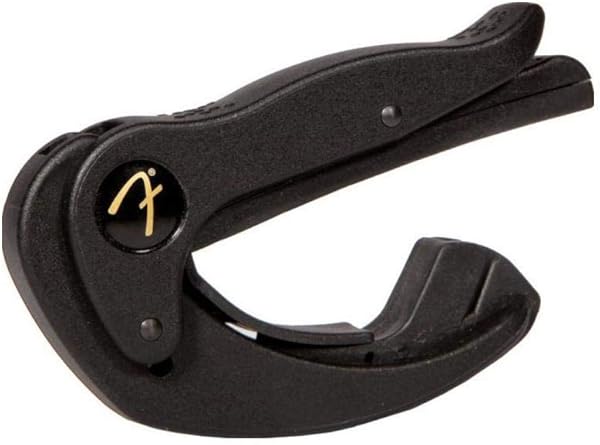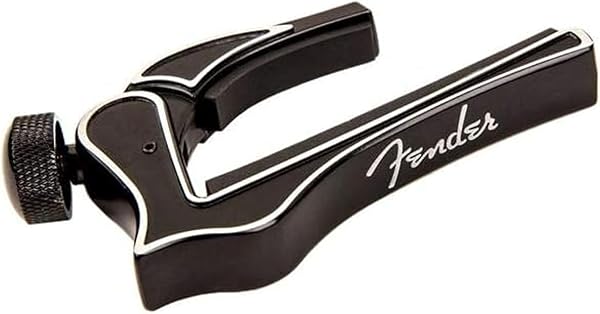
A capo is a clamp that presses down all strings at a chosen fret, raising the guitar's pitch by one semitone per fret — so a capo at fret 2 raises every note by a whole step (two semitones). If you play a G chord shape with a capo at fret 2, it sounds like an A chord. If you play a D shape with a capo at fret 3, it sounds like an F chord. Capos let you use familiar open-chord shapes in any key, making them one of the most practical tools for matching your guitar to a singer's vocal range.
A capo is one of the most underrated tools in a guitarist's kit. It lets you stay in comfortable open-chord territory while playing in any key — without learning barre chords for every key signature. Understanding how transposition with a capo works opens up your repertoire dramatically and solves the most common problem guitarists face when playing with singers: key mismatch. (See our [best electric guitar for beginners under $300](/knowledge-hub/2026-05-29-best-electric-guitar-for-beginners-under-300) for more detail.) (See our [fingerpicking guitar for beginners](/knowledge-hub/2026-06-02-fingerpicking-guitar-for-beginners) for more detail.)
What a Capo Does
The capo acts as a moveable nut. When you clamp it across all six strings at any fret, it shortens the vibrating length of the strings and raises the pitch of every open string by the same amount.
- Each fret = 1 semitone (half step)
- Capo at fret 1 = everything raised 1 semitone
- Capo at fret 2 = everything raised 2 semitones (1 whole step)
- Capo at fret 5 = everything raised 5 semitones
- Capo at fret 7 = everything raised 7 semitones (a perfect fifth)
When you play a chord shape with a capo, the shape stays the same — your fingers form the same pattern relative to the capo — but the actual pitch is higher. A G-shape chord with a capo at fret 2 uses the exact same fingering as an open G, but the pitch matches an A major chord.
This is the fundamental principle of capo transposition: the shape stays the same, the key changes.
No chord theory required. No barre chords. No relearning your fingerboard. Just clamp the capo, play your shapes, and the guitar outputs a different key.
Capo Transposition Chart
This chart shows what each common open chord shape sounds like with the capo at different fret positions.
| Capo Fret | C shape sounds like | G shape sounds like | D shape sounds like | A shape sounds like | E shape sounds like | |---|---|---|---|---|---| | 1 | C# / Db | G# / Ab | D# / Eb | A# / Bb | F | | 2 | D | A | E | B | F# / Gb | | 3 | D# / Eb | A# / Bb | F | C | G | | 4 | E | B | F# / Gb | C# / Db | G# / Ab | | 5 | F | C | G | D | A | | 6 | F# / Gb | C# / Db | G# / Ab | D# / Eb | A# / Bb | | 7 | G | D | A | E | B |
How to read this chart: Find the key you need in the row headers. Cross-reference with the capo position to see which chord shape to use.
Example: You need to play a song in F major but want to avoid barre chords. Find F in the chart: a C shape with capo 1, or an E shape with capo 1, or a D shape with capo 3 all produce F major. Choose whichever set of chord shapes feels most natural.
Example 2: A song is written in G but your singer needs it a step lower in F. Remove the capo and play E shapes — or use capo 1 and play D shapes. Multiple paths reach the same destination.
How to Find the Right Key for Your Voice
The most common use for a capo is matching the guitar's key to a singer's comfortable vocal range. Here's a practical process:
Step 1: Learn the song in its written key first. Even if the key doesn't suit your voice, know the chord shapes. This gives you a reference point.
Step 2: Sing the melody without accompaniment. Find the notes that feel most comfortable — not strained at the top, not mumbly at the bottom. The ideal key sits in the middle of your comfortable range.
Step 3: Identify the root note of your comfortable range. If the song's original key is G and you're straining on the high notes, you need a lower key — try dropping to E or F. If the original is low and you feel you need to go higher, try A or Bb.
Step 4: Use the capo chart to find the right fret position. You want to keep the same chord shapes but output the new key. If the original song uses G-C-D shapes and you need to play in A, put the capo at fret 2 — the G-C-D shapes now output A-D-E.
Step 5: Test and adjust. Clamp the capo, play through the song, and sing. If it still feels high, move the capo down one fret. If too low, move up one fret. One fret equals one semitone — small adjustments make a significant difference.
Most guitarists find their ideal capo position within 2–3 tries.
Capo Positions for Common Song Keys
Some keys come up constantly in popular music but are awkward to play in open position. Here are the most practical capo solutions:
Key of A: Play open (no capo) with A-D-E shapes, OR capo 2 with G-C-D shapes. Capo 2 gives you a brighter, more resonant open-chord sound.
Key of B: Capo 2 with A-D-E shapes, OR capo 4 with G-C-D shapes. B is notoriously difficult as barre chords; capo solutions are strongly preferred.
Key of Bb: Capo 1 with A-D-E shapes, OR capo 3 with G-C-D shapes. Bb is one of the trickiest keys on guitar without a capo.
Key of C#/Db: Capo 1 with C-G-D shapes (sounds like Db), OR capo 4 with A-D-E shapes. Both work well.
Key of F: Capo 1 with E shapes, OR capo 3 with D shapes, OR capo 5 with C shapes. The F barre chord is the bane of beginners — a capo at fret 1 with E-shape chords is a completely legitimate alternative.
Key of F#/Gb: Capo 2 with E shapes, OR capo 4 with D shapes, OR capo 6 with C shapes.
Key of Eb: Capo 3 with C shapes, OR capo 6 with A shapes. Eb is a brass and horn key — uncommon for guitar but useful when playing with wind instruments.
When NOT to Use a Capo
Capos are tools, not universal solutions. There are situations where a capo is the wrong choice:
Going lower in pitch: A capo can only raise pitch — it makes the guitar higher. If you need to lower the key, you must either retune the guitar (drop D, open tunings) or use a different key without a capo.
Electric lead guitar playing: Lead guitarists rarely use capos because the fretboard geography shifts. If you've memorized the minor pentatonic pattern at the 5th fret for A minor, adding a capo at fret 2 moves everything relative to your reference points. Most lead players prefer to transpose mentally or learn the scale positions in the new key.
Songs that use open-string drones: Some songs depend on specific open strings resonating freely against fretted notes — "Cinnamon Girl" by Neil Young, many Travis Tritt songs, and certain Celtic fingerstyle pieces use drone strings that define the song's character. A capo changes which strings are open and can destroy the intended sound.
Tone considerations: On acoustic guitar, a capo physically shortens the string length, which tends to thin out the bass response and brighten the treble. On some guitars this is desirable; on others it produces a thin, choked sound. Try your capo at higher frets (5+) and listen critically — some guitars don't capo well above fret 4. (See our [guitar string selection guide](/knowledge-hub/guitar-string-selection-complete-guide) for more detail.)
Dropped-D and alternate tunings: If your guitar is tuned to Drop D or an open tuning, the capo transposition relationships change. The chart above applies only to standard EADGBE tuning.
FAQ
Does a capo make chords easier to play? Yes and no. A capo at a higher fret shortens the string length, which slightly reduces string tension and can make chord shapes easier to press. However, the main benefit of a capo isn't ease — it's key flexibility. Some players use a capo at fret 1 or 2 specifically because the slightly reduced string length makes open chords more comfortable. A capo is not a substitute for building proper technique, but it's a genuinely useful shortcut for key matching.
Will a capo detune my guitar? A poorly positioned or cheap capo can cause tuning problems. The capo should sit as close to the fret as possible (just behind it, not on top of it) and apply even <a href="/knowledge-hub/guitar-capo-tension-adjustment-guide">pressure across all strings</a>. If your guitar goes out of tune after clamping a capo, check the <a href="/knowledge-hub/capo-placement-techniques">placement</a> first. Good-quality capos — Shubb, G7th, Kyser — hold tune reliably. Always retune after placing a capo, even a good one.
What's the highest practical fret to put a capo? Most players don't capo past fret 7. Higher than that, the chord voicings become very close together and sound thin, and the playable fret space above the capo shrinks significantly. In practical terms, capo positions 1–5 cover the vast majority of transposition needs. Some players use capos up to fret 9 for very high-pitched, mandolin-like sounds, but this is stylistic rather than functional transposition.
Ready to level up your playing? Visit [professionalgl.com/knowledge-hub](https://professionalgl.com/knowledge-hub) for beginner gear guides and expert advice from our Pro Concierge.
Related Reading
- [How to Learn Guitar Chord Progressions: Beginner Guide](/knowledge-hub/2026-05-30-how-to-learn-guitar-chord-progressions)
- [Open Chords for Beginners](/knowledge-hub/2026-06-03-open-chords-guitar-beginners)
---
Ready to upgrade your guitar gear? Browse our full selection at [PGL Music Store](/shop) and use our [Gear Finder Quiz](/gear-finder) to find the perfect setup for your style and budget. Free shipping available on qualifying orders.
Browse Professional GL — Strings, Capos, Pedals & More. USA-Designed. Free Shipping on Orders $50+.
Trusted by 1,318+ professional musicians · 4.8 stars · 30-day money-back guarantee · Ships in 1–3 business days.
READY TO UPGRADE YOUR RIG?
Shop Guitar Strings, Capos & Pedals — Free Shipping $50+
USA-designed gear trusted by 1,318+ musicians. Free shipping on orders $50+. 30-day money-back guarantee.
Shop All Guitar Gear — Free Shipping $50+ →