Changing guitar strings is a fundamental maintenance task that takes 15–30 minutes and should be done every 1–3 months for regular players, or whenever strings sound dull, feel rough, or fail to hold tune. The process differs slightly by guitar type — acoustic, electric, classical, or bass — but the core steps are universal: loosen and remove old strings, clean the fretboard, install new strings, and stretch them in until tuning holds consistently.
For guidance on which strings to buy, see our [best guitar strings for beginners guide](/knowledge-hub/2026-06-22-best-guitar-strings-for-beginners). (See our [guitar string selection guide](/knowledge-hub/guitar-string-selection-complete-guide) for more detail.) (See our [guitar capo tension adjustment guide](/knowledge-hub/guitar-capo-tension-adjustment-guide) for more detail.) (See our [guitar pedal order guide](/knowledge-hub/guitar-pedal-order-guide) for more detail.)
When to Change Guitar Strings
String life depends on how often and hard you play. General guidelines:
- Casual players (1–2 hours/week): Every 3–4 months
- Regular players (daily, 30–60 min): Every 4–8 weeks
- Gigging musicians: Every 1–2 weeks, or after major performances
- Tone sounds dull or flat compared to fresh strings
- Strings feel rough or gritty under your fingers
- Strings won’t hold tuning despite correct technique
- Green or dark discoloration visible on the winding
- String breaks occur more frequently
Coated strings (such as Elixir) last 2–3 times longer than uncoated strings. A $10 investment in coated strings every 3 months typically outperforms changing cheap uncoated strings monthly.
Tools You Need
- New set of strings (correct gauge for your guitar)
- String winder/cutter combo ($5–15 — saves significant winding time)
- Tuner (clip-on, pedal, or phone app)
- Clean cloth for fretboard cleaning
- Fretboard conditioner (optional, for rosewood or ebony boards)
How to Change Acoustic Guitar Strings
Acoustic guitars use ball-end strings seated at the bridge by bridge pins — small pegs that lock the string ball end in the bridge plate.
Step 1 — Loosen and remove: Use your string winder to loosen each string until fully slack, then remove all six strings. Removing all at once lets you clean the full fretboard.
Step 2 — Remove bridge pins: Use the notch on the back of a string winder or a dedicated bridge pin puller to gently pop out each pin. Never use a knife or sharp tool — you risk splitting pins or gouging the bridge.
Step 3 — Clean the fretboard: Wipe down the entire fretboard with a slightly dampened cloth. Apply fretboard conditioner to rosewood or ebony boards — this is the only time you have unrestricted access to the full board.
Step 4 — Insert new strings: Thread the ball end of the new string into the bridge pin hole. Replace the bridge pin with its groove facing the sound hole. Pull the string upward gently to seat the ball end against the bridge plate.
Step 5 — Wind onto the tuning peg: Thread the string through the tuning peg hole, leaving 2–3 inches of slack past the peg. Bend at the peg, then wind the string clockwise (toward the center of the headstock) with neat, stacked winds. Three to four winds is ideal for acoustic strings.
Step 6 — Stretch and tune: New strings detune rapidly until broken in. Tune to pitch, then gently pull each string upward away from the body with your fingers — a steady stretching motion, not a sharp bend. Retune. Repeat 4–5 times. Strings stabilize within 15–30 minutes of playing.
How to Change Electric Guitar Strings
Electric guitar string-changing varies by bridge design.
Hardtail bridge (Telecaster, Les Paul): Strings thread from the back of the body through ferrules and up through the bridge saddles. Remove strings from the rear ferrules, thread new strings from back to front, seat at the saddle, and wind. Two to three winds at the tuning peg is standard for electric strings.
Stratocaster-style tremolo: Strings thread from the back of the body through the tremolo block. On floating tremolo systems, avoid removing all strings simultaneously — this causes the bridge to tilt backward. Change strings one at a time to maintain spring balance, or block the bridge while restringing.
Floyd Rose and locking tremolos: Cut the ball end off each string. The string is clamped into the saddle fine-tuner block at the bridge using a small hex key. Each bridge system is slightly different — consult your guitar's manual or a system-specific tutorial for exact clamping procedure.
How to Change Classical Guitar Strings
Classical guitars (nylon strings) use a tie-at-the-bridge system — no bridge pins. The knot determines whether the string holds reliably.
Tying at the bridge: Thread the string through the tie block hole, leaving 2 inches of tail. Wrap the tail under the main string twice, then pass the end under the wrap 2–3 more times and pull firmly. The knot locks under string tension and won't pull through.
At the tuning machine: Classical tuners have a slot or hole through the roller barrel. Thread through, pass the tail over and under the roller, and wind. Use at least 4–5 winds for nylon strings — the smooth surface needs extra contact to grip securely.
Nylon strings take significantly longer to settle than steel. Plan on 2–3 days of regular playing and retuning before new classical strings hold pitch reliably.
How to Change Bass Guitar Strings
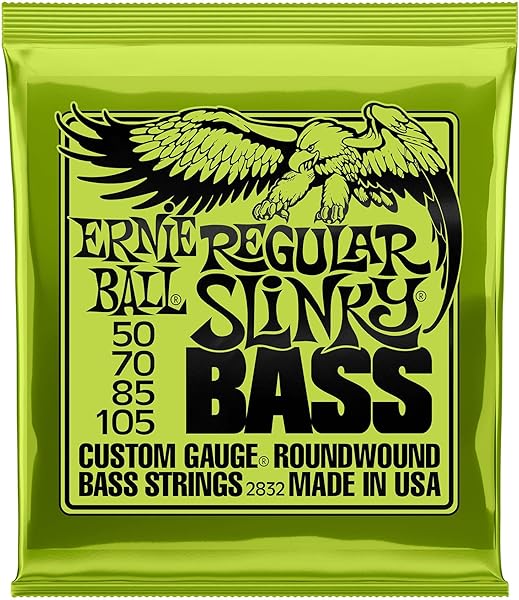
Bass string-changing follows the same process as electric guitar, with two key differences: bass strings are substantially thicker and heavier (always use a string winder — winding by hand is slow and tiring), and only 1–2 winds at the tuning peg are needed due to string diameter.
For through-body bass designs, thread strings from the rear ferrules through the body before seating them at the bridge saddles.
FAQ
How long does it take to change guitar strings? With a string winder/cutter, an experienced player restrings a full set in 10–15 minutes. Beginners typically take 30–45 minutes on their first few attempts. After 5–10 string changes, the process becomes fast and automatic.
Should I change all strings at once or one at a time? For most guitars, changing all strings at once is better — it gives you full fretboard access for cleaning. The exception is floating tremolo bridges (Floyd Rose, Kahler), where removing all strings simultaneously shifts the bridge and disrupts spring balance. For those bridges, change one string at a time.
How do I know which gauge strings to buy? Match the gauge of what was previously on the guitar unless you want to change the feel intentionally. Most acoustic guitars ship with light (12–53) or extra-light (11–52). Most electrics ship with 9–42 or 10–46. For detailed recommendations by style and guitar type, see our [best guitar strings for beginners guide](/knowledge-hub/2026-06-22-best-guitar-strings-for-beginners).
After restringing, proper string stretching is essential to stay in tune quickly — see our <a href="/knowledge-hub/guitar-string-stretching-guide">guitar string stretching guide</a> for the correct technique. For understanding how string choice affects your tone, our <a href="/knowledge-hub/guitar-string-gauge-tone-relationship">string gauge and tone relationship guide</a> explains everything you need to know.
Browse acoustic and electric guitar strings at [PGL Music Store](/shop) — USA-designed gear trusted by 1,318+ musicians. Free shipping on orders $100+, 30-day money-back guarantee.
See also: [How to Change Acoustic Guitar Strings: Bridgepin Method & Proper Winding](/knowledge-hub/how-to-change-acoustic-guitar-strings)
*See also: [How to Change Acoustic Guitar Strings: Full Acoustic-Specific Guide](/knowledge-hub/how-to-change-acoustic-guitar-strings) — detailed acoustic-only guide covering bridge pins, saddle cleaning, and humidity tips.*
Browse Professional GL — Strings, Capos, Pedals & More. USA-Designed. Free Shipping on Orders $50+.
Trusted by 1,318+ professional musicians · 4.8 stars · 30-day money-back guarantee · Ships in 1–3 business days.
READY TO UPGRADE YOUR RIG?
Shop Guitar Strings, Capos & Pedals — Free Shipping $50+
USA-designed gear trusted by 1,318+ musicians. Free shipping on orders $50+. 30-day money-back guarantee.
Shop All Guitar Gear — Free Shipping $50+ →